Since all life is a journey it’s hardly surprising that novels about transformational journeys are as old as the hills… well, older actually. Homer’s Odyssey, which sees Odysseus journeying around the wine dark Mediterranean is, in part, planned by the Gods up on Mount Olympus. And, like all the best transformational journeys, by the time Odysseus returns not only is he a different person but so is his long suffering wife, Penelope, and son, Telemachos.
It’s a useful format for novelists from Conrad in Heart of Darkness to Hermann Hesse in Siddartha and more recently Yann Martel’s Life of Pi, where the hero journeys around the Pacific for 227 days and not to forget John Bunyan’s Pilgrim’s Progress. It works for non-fiction too. Cherry Apsley Garrard’s The Worst Journey in the World is one of the most powerful books I have ever read.
Last week I read about two other, quite different journeys: Rachel Joyce’s compulsively enjoyable account of the Unlikely Pilgrimage of Harold Fry and Rabbi Jonathan Wittenberg’s deeply humane account of his real journey walking from Frankfurt, the city where his grandfather had been Rabbi until 1939, to Finchley in north London, where he is now the Rabbi. The idea was that, as his community was constructing a new building, he would bring back from the one to the other the Eternal Light, or Ner Tamid, and so the book is called Walking with the Light. As Jonathan walked along the Rhine with his faithful dog Mizpah he talked to many Germans, young and not so young, Christian, Muslim and even Jewish about matters of political, social and cultural. He intersperses these encounters along the way with extracts from ancient texts, insights into the world today, musings about Literary Germany which his grandparents never ceased to love and a funny blog written by Mizpah the dog. I’ve been reading it slowly, not gulping it down, and marked many passages for further reflection. When he sees the rock of the Lorelei, immortalised by Heine the poet whom his parents especially revered, he weeps. Could it be, he wonders, because the fate of Heine’s Lorelei somehow epitomised that of his own family and history?
Jonathan Wittenberg recognises in a passage that brought me, too, close to tears that surely all is life is a journey, his destiny to spend all his life exploring, not just geographically but between generations. ‘The light I spire to carry,’ he writes, ‘will come to rest more than anywhere else in my children’s hearts. The depth of this responsibility disturbs me and I pray that nothing I ever do may cause them hurt and that I may be given the grace to transmit the flame as wisdom and love.’
I worried when I thought Harold Fry (or his creator, Rachel Joyce?) was veering towards the pseudo religious when his journey attracts a gaggle of hangers on who threaten to take over the journey. But the way Harold gracefully gives in to his uninvited followers turned out to be part of the book’s enormous charm. This was not a book about spirituality, almost the reverse. What Joyce was celebrating (it seemed to me) were old fashioned virtues like friendship, shared history, trust, loyalty and finally the possibility of renewal while religion per se was if anything eschewed. What both walkers have in common, apart from suffering blisters and enjoying the company of dogs, is that by doing something themselves they engage the human desire to encourage others. The number of onlookers who offer food both to Jonathan and Mizpah in reality and the fictional Harold is what I so often do in clicking the ‘justgiving’ button for someone else doing the marathon when I myself should be doing (okay, so not THAT) but something similar.
In very different ways these are both ‘feel good’ books. But where The Pilgrimage of Harold Fry occasionally veers towards sentimentality, in Walking with the Light the experience of reading about so much suffering, brutality and murder within living memory inevitably gives it a dark undertow. When Jonathan Wittenberg meets a priest who tells him how he misses the possibility of a deep spiritual dialogue with the Jewish community he is puzzled how to respond. The Germans either expelled the Jews or killed them and then they complain about a missed conversation, he reflects. But at every stage of the way he reminds himself of the importance of listening, of constantly engaging in dialogue. ‘This is not to betray the present through a punitive unwillingness to allow the past to be gone,’ he insists. Nor will he give in ‘to a heartless unpreparedness to listen to the echoes of the past and read the signs of the terrors which it wrought.’
It’s a tolerance, a refusal to be baited, that seems so sadly lacking as most of us journey through life, whizzing from one airport to another, never actually stopping to see what lies beyond, no time to engage with some of the world’s seven billion and rising who do not always tell us what we’d like to hear. Perhaps there is a very simple moral to be drawn from both these books: get out and walk more. At least that’s the last word from Rabbi Wittenberg, well, actually, it’s from Mizpah the dog.
Walking with the Light: from Frankfurt to Finchley by Jonathan Wittenberg Quartet £20.00
The Unlikely Pilgrimage of Harold Fry by Rachel Joyce Random House £12.99

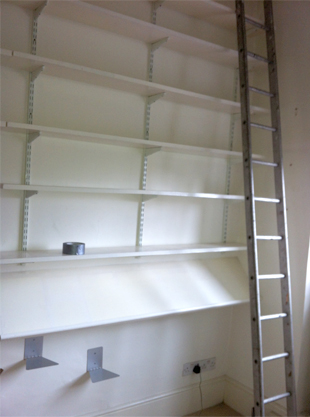 After 20 years of accumulating detritus on a ridiculously wide range of subjects, I have finally been forced to clear out my study. It’s a grim business that I’ve been postponing for months. This is my private sanctuary, the room of my own where eight books have been written, and it’s the only room where the muse strikes, since I believe a muse is nothing more than concentration, wide reading and being near the laptop at the critical moment. But the builders are arriving tomorrow so no further delay is possible. I have done mini culls before; in fact there is a sort of ritual clearance after each book is finished, putting the mounds of documents and letters into a big plastic box away in the attic hoping no one will ever ask me to search for some obscure reference. But they invariably do and it’s not fun searching on my knees in the dark and dusty attic where wasps make their nest among a different set of rafters every summer. These days there is much less paper generated per book as so much of the information comes through email and is stored on various obsolete hard disks, so why do I feel the necessity to store the old paper version at all? Is there a cut off point, say five years and then shred? But in truth it’s not just the documentation for the books that I keep…I am guilty of keeping hundreds of copies of old magazines (or I did until last week when almost all found their way into the recycling lorry). And I cannot read a newspaper without tearing out pages, half pages or just a column making it impossible for anyone else to read a newspaper if I have got there first. But the trouble with old newspaper articles is that once you have kept them for a few years they acquire a hallowed importance way beyond what is actually in the words or story so then they cannot be thrown away. Mostly these articles go into a pink box labelled: ‘Keep for the novel’. But I have not yet written a novel. Is it because I know real life is always stranger than fiction.The box is staring at me now as I type this. Perhaps this is the moment?