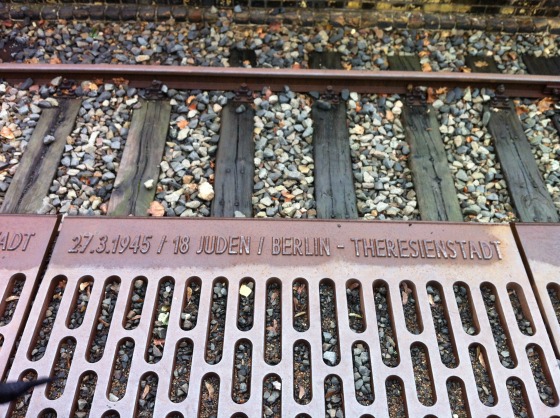
View from my bedroom: Paris rooftops
“Je suis fini,” I told the librarian in the subterranean Bibliotheque Nationale, to guffaws of laughter. “Vous avez fini,” he reprimanded me as he brought his laughter under control. Yes, I agreed with him I had finished but in English we might also say ‘I am finished for the day or with these books.’ Clearly, I had said something totally inappropriate, probably best left to my imagination but I am pleased I at least provided him with some amusement for the day. As usual, I’d been up since 5 am in order to catch the 7 am Eurostar and had made my way across Paris to the Bibliotheque Francois Mitterand, (BNF), a building that feels as if you are working in a prison or nuclear bunker, for a day of research. At first I was refused entry because my (very small) rucksack on wheels was deemed too large, but with my inadequate French I finally persuaded them to allow me in. And once I started work the atmosphere was serene, the chairs fabulously comfortable and the café delicious. I must keep going with the French lessons!
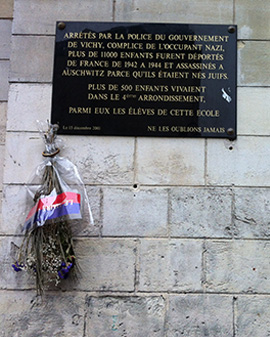
Plaque outside the Memorial de la Shoah
When not at the BNF I go to Nanterre, repository of many resistance archives, to immerse myself in yet more harrowing accounts of women in concentration camps or in factories working as slave labourers, or to the Holocaust Museum, where the librarian explains why she often does not have what I am looking for “because we deal with death not life, and with the nobodys in life who have no one to come and deposit papers with us.” And as I am finding my way around the city to a number of other resistance museums or repositories of World War Two papers, I can see why so many Parisians complain about passenger safety on the underground. The short amount of time the metro doors remain open at stations is a source of regular complaint and this week I was one of those ‘snapped.’ The automatic doors close violently and stop for nobody. I was trailing my very small suitcase trying to get through the crowds when bang – they shut on me, poised halfway out, causing instant rib pain. But at least I got out and sat down to recover my breath. I’ve done nothing more than bruise a rib but it’s very painful. Very painful? How do I dare even to write that as I research lives that were truly, achingly, desperately painful, often with little or no food or heat and full of fear, threat and torture. Yet few complained.
Best of all are my interviews with old people who have lived through the experiences. I’m keeping the best details of these for the book itself but one memory that will stay with me is meeting two friends, one almost 90 the other a little older, comparing memories. One says to the other: “But you – you were in the resistance, no? I never knew. All these years. Why didn’t you talk about it?”
“What was there to talk about?” she replies. “It was just what one did.” Again and again, I ask myself, what I would have done? Courage, like pain, are just two words I need to understand better in French as well as English.


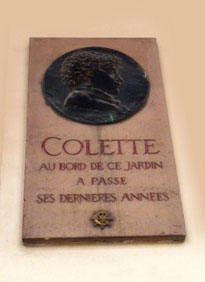 But yesterday my resolve cracked as my research took me to a new part of town – the Comedie Francaise archives are located not only right in the centre of town but in the Palais Royale, nestling among the historic arcades full of designer boutiques. The writer Colette lived here and ever watchful had a good view of several unsavoury comings and goings during the War. My hands were dangerously cold, I decided. I had to have some gloves, some Parisian gloves I convinced myself. And as my cosseted fingers recovered their feeling I recognised that these fabulously expensive gloves are just softer, sleeker, longer more supple than any gloves I have ever bought in London. No I am not acquiring a Parisian shopping habit. They are only gloves after all.
 So let’s go back a bit. Who was Enid Bagnold? In her own sparkling and idiosyncratic autobiography (entitled I am tempted to say with no artifice but of course there was artifice aplenty) ‘Enid Bagnold’s autobiography’, published in 1969, she writes that she was driven to explore family history because of her fascination that “sperm had been shot across two centuries to arrive at me”. Such an earthy – and original – simile was typical of her writing (she once described her own prose as ‘beautiful vomit’) but what she is also revealing is an intense fascination with herself. Not unusual for ‘a born writer!’ as she called herself. When I came to research her biography I found all her notebooks and scrapbooks were embellished with directions/ guidance for a putative biographer – me! Pictures of the Franco-Romanian princes, Antoine and Emmanuel Bibesco, for example, princes who had been close friends of Proust, were annotated with helpful comments like ‘this is the brother who committed suicide’ or ‘here we are visiting a church together’!