Interfaith Community Relations in Bradford
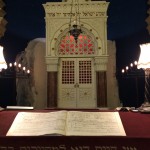
The Book of Marriage Records Bradford Synagogue
In anticipation of this year’s Holocaust Memorial Day and the importance of respecting other communities, I’ve been thinking about a day I spent recently in Bradford where I witnessed a warm coming together of Muslim and Jewish communities. It’s not what you’d expect from reading an average diet of British newspapers or listening to George Galloway, former MP for Bradford West.
I went to visit the synagogue in Bowland Street, Bradford, where my grandmother, the music hall star and Bradford pantomime favourite, Miss Lily Black, was married more than a hundred years ago. The synagogue, founded in Moorish style in 1880 and now a Grade 2 listed building, is desperately in need of funds for repairs if it is to survive. I’d wanted to see it for years but, with the once flourishing community in decline, I knew I could put off my visit no longer. In 2013 the synagogue was saved from closure only thanks to a fund raising effort mounted by the secretary of a nearby mosque, together with the owner of a popular curry house, a local textile magnate and the leader of the local Jewish community, Rudi Leavor. This released much needed funds to repair a leaky roof. It’s a start. After a most delicious lunch at the Sweet Centre curry restaurant, next door to the synagogue, I was reassured by owner Zulficar Ali that he was keeping an eye on the beautiful old building.
Lily was married in Bradford because, barely out of her teens, she had converted to Judaism. She obviously thought it was better to have the ceremony outside London, where she had grown up in a working class haberdasher’s family without much money, left school at 14 and struck out on her own as an artist’s model and actress. In seven years she had made a career for herself and travelled around the country performing, but what did she know of life beyond the stage?
According to Ernest Aris, who went on to become famous as a children’s illustrator and who often drew Lily for several Bradford newspapers, she was “delightful, the most charming Principal Girl this city has seen since Madge Crichton played Cinderella at the Royal. She will make a great hit,” Aris predicted of her while she was starring in Robinson Crusoe at the Prince’s Theatre, “she is sprightly without being vulgar, she has a sweet voice and a personality which would melt even the heart of a Free Church Councillor!”
Ernest Aris clearly had a soft spot for Lily, who was, he added, enshrined in his susceptible heart. However, while performing at Bradford, Lily met and fell in love with my grandfather, Leo Hirshfield from a Birmingham silver making and jewellery family, when he came to try and persuade her to be photographed for a Raphael Tuck postcard. She was only 20 when she accepted his proposal of marriage, converted to Judaism and the couple were married in Bowland Street synagogue on September 25, 1910.
Lily was sufficiently famous for a reporter to attend the wedding. He commented “there were only a few of us present and among the witnesses were Mr and Mrs Henry Cohen of Leeds (Leonora Cohen was the militant suffragette who became famous in 1913 when she flung an iron bar into a jewel box at the Tower of London. She was remanded in prison and went on a hunger strike) and Mr Jacob Moser, Lord Mayor Elect of Bradford. The bride wore a sensible gown of grey silk and was addressed by Rabbi Dr Strauss who told her that “you, my dear bride, have idyllic Ruth of old as your example. You like her have said and verified the touching words whither thou goest, I will go, thy people shall be my people and thy god my god.”
There was a small reception held at the Midland hotel and, immediately upon marriage, Lily gave up performing and rarely talked about her years on the stage. For seven years she had had had a stellar career touring the country and working hard and long hours. She was also in demand as an artist model largely for her spectacular thick and curly reddish gold hair. Now all she wanted was a comfortable and secure home life and she and Leo produced three children, Desmond, who became Lord Hirshfield, a labour peer, Norman who became a Conservative councillor and Mayor, and my mother Joan, who married, in 1946, Major Eric Rubinstein. I was born in 1951 my sister Jane in 1948.
I wish I had asked her more questions as there is so much I now want to know. I am so thrilled at last to have seen the synagogue where her new life began and happy to know that there is new life in the area which is keen to preserve the past. Zulfi Karim, Secretary of Bradford Council of Mosques, who is on the board at the Central Westgate mosque a few hundred metres up the road from the synagogue said: “It makes me proud that we can protect our neighbours and at the same time preserve an important part of Bradford’s cultural heritage.”



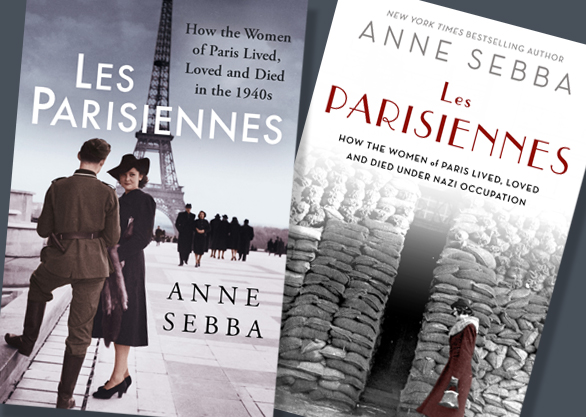 1. There is always a choice in life. Choice is inside our heads. How do we think even if choice appears to have been taken away, how do we act? Women in Paris faced an extreme: would I have walked out of a cafe if a German soldier entered thereby risking my life? Would I have delivered political leaflets, what exactly would I have done to help a friend in prison standing up for what he/she believed in?